
Singapore to Darwin
North America market · USD
Silversea
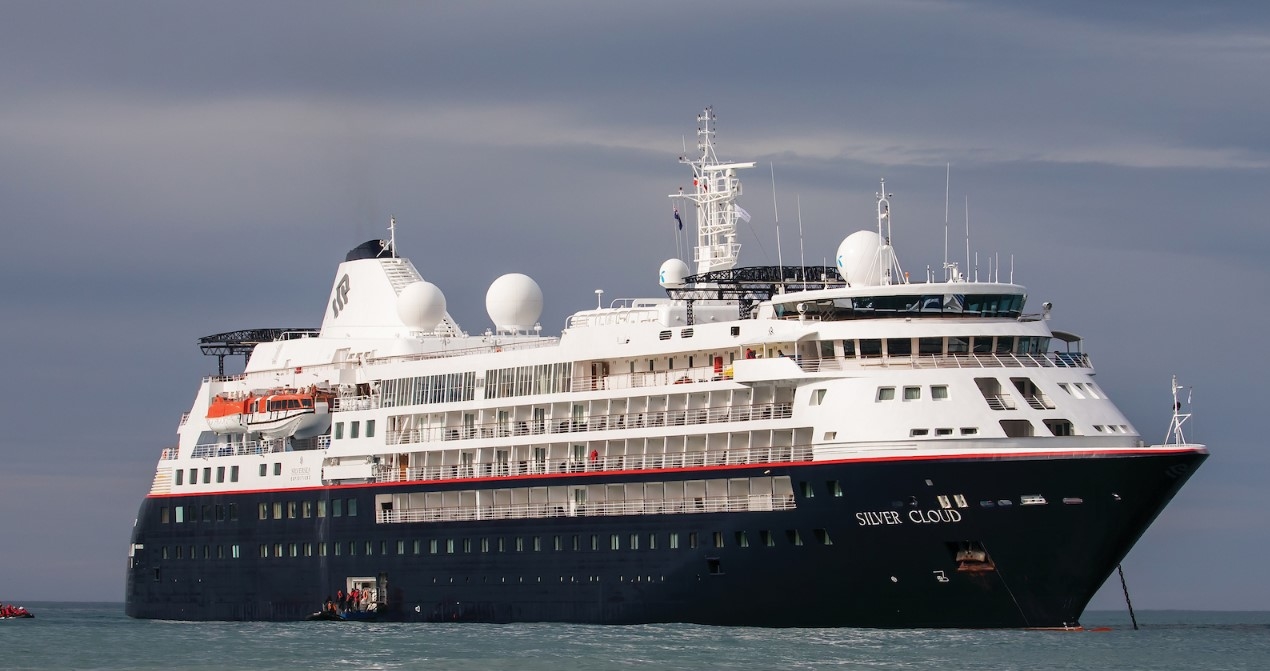
Silver Cloud
Singapore
Darwin, Australia
–Day-by-day itinerary
- SingaporeAdvanced, airy and elevated, Singapore is a spectacular, futuristic vision of utopian city life. A healthy population of almost six million call it home, but this is a city designed with space to breathe, and gorgeous outdoor parks, massive indoor greenhouses and beautiful recreational spaces spread between the City of Gardens' skyscrapers and soaring structures. Once a quiet fishing village, now a glistening island city-state and an international beacon of science, education and technology. View less Singapore is almost intimidatingly clean - and the hyper-efficient public transport system whips residents and visitors across the city's neighbourhoods in a heartbeat. Glorious fountains and audacious skyscrapers loom up - nodding to traditional feng shui beliefs - and putting on dazzling illuminated displays after dark. The lush green botanical gardens are a spectacular UNESCO World Heritage Site, covering 52 hectares and decorated with impressive colourful orchids. Or breathe in more of the freshest air by heading up to wander the canopy strung bridges of MacRitchie Reservoir Park. Head for the iconic Marina Bay - a landmark of the city crowned by three interconnected towers, which watch out over island sprinkled waters. Jaunt between Little India and the atmospheric Chinatown in minutes, where beautiful temples - like the Chinese Thian Hock Keng Temple and Hindu Sri Mariamman Temple add rich cultural intrigue. Singapore's cuisine is a mouthwatering fusion of its Indian, Chinese, Indonesian, and Malay influences, taking and enhancing the best of each. Enjoy dishes in towering restaurants, or toast the glowing skyline with the city's eponymous gin-soaked cocktail - a Singapore Sling.
- At Sea
- Tanjungpandan, Belitung Islands
- Pulau Lengkaus, Belitung Islands
- Karimunjawa, IndonesiaCovered by coconut trees and surrounded by white sandy beaches, Menyawakan Island lies some 64 nautical miles off Java’s coast in the Karimunjawa archipelago. This tranquil and secluded setting offers tropical and laid back ambiance and good snorkeling.
- At Sea
- Pulau Satonda
- Kenanga Village, Indonesia
- Komodo IslandKomodo, the volcanic island of giant lizards, lies 320 miles (515 kilometres) east of Bali. Komodo is 25 miles (40 kilometres) long and 12 miles (19 kilometres) wide; its parched hills ascend to a height of 2,410 feet (734 metres). Komodo is home to a community of some 2000 people who make their living primarily from fishing. The island is the centrepiece of the Komodo National Park, where you will find the most tangible legacy left behind from the Jurassic Era. View less Komodo Island was little-known and the Komodo dragons were only a myth until the giant lizards were scientifically described in 1912 . Extinct almost everywhere else, the island attracts thousands of visitors from all over the world who come to see the Komodo dragons in their natural habitat. Komodo National Park has been declared a UNESCO World Heritage Site and Biosphere Reserve. The Komodo dragon’s great bulk and weight are its most unique characteristics; even hatchlings average 20 inches (51 centimetres) in length. The adult male can reach 10 feet (3 metres) and weigh up to 330 pounds (150 kilos). Females attain only two-thirds of this size, and lay up to 30 eggs at a time. With their saw-like teeth, these fierce creatures are able to rip apart a deer, goat or wild pig. The animals have an uncanny sense of smell, and are considered among the world's most intelligent reptiles. They are quite agile over short distances, and can move swiftly to capture their prey. The Indonesian Directorate of Nature Conservation (PPA) administers Komodo National Park. Park Rangers must escort all visitors; independent exploration of the park is not permitted.
- Pink Beach, Komodo, IndonesiaPink Beach earned its name for the way the beach can appear to have a rosy hue in certain lights. The color comes from small flecks of red coral mixed in with the fine white reef sand. With a few trees along the beach for shade, this stretch of coast makes a fine place to relax or enjoy a snorkel or dive in the crystal clear waters. View less It is possible to spot a striped clown fish nestled among the protective tentacles of its sea anemone host, or to see a grouper lazily swimming by a flamboyant soft coral. The reef here is now protected by law and the maturing corals are a joy to behold.
- At Sea
- At Sea
- Darwin, Australia"Australia's capital of the north is a uniquely tropical city, and a historically isolated outpost of this vast, diverse country. Reaching up towards the equator, a full 2,000 miles from Sydney and Melbourne, the city was named in honour of Charles Darwin by the British settlers who established a frontier outpost here. With a unique history, beautiful islands nearby, and a palette of sizzling Pacific flavours, colourful Darwin is an enchanting and exotic Australian destination. Crocodiles patrol the jungled waterways and tropical rainforests around Australia's gateway to the Top End. Explore via airboat to look down on the veiny waterways of the mist-laced Kakadu National Park. The sounds of chattering birdlife and the gentle splash of fountains and waterfalls will fill your ears in George Brown Darwin Botanic Gardens. Soak it all in, before kicking back and relaxing with a picnic and a crackling barbecue. The sunshine and famous tropical pink sunsets mean many visitors naturally gravitate to the city's soft sands to relax at spots like pretty Mindil Beach, as evening approaches. The adjoining market is filled with souvenirs and crafts stands and is the perfect great place to enjoy some fiery Asian flavours. Stroll the stalls, grab some food, and crack open an ice-frosted beer as the sunset show begins. It may be remote, but Darwin found itself on the front line during the Pacific War, as the Japanese air force unloaded their bombs onto the city in 1942. This relaxed unassuming city has a deeply resilient backbone, however, and you can explore the museums to learn more of the war's impact on Darwin, as well as the devastating effects of one of Australia's worst natural disasters, Cyclone Tracy in 1973."
- King George River
- Swift Bay
- Buccaneer ArchipelagoSet off the coast of Western Australia, the Buccaneer Archipelago is one of the Kimberley’s finest secrets. The Archipelago, 50 k2 (19 sq mi), is made up of around 800 islands and protect the mainland from the huge 12 metre tides and astonishing speed of the Yampi (or, in traditional Aborigine, “Yampee”) Sound. The speed and power of the water many not make for pleasant bathing, but do however result in fantastic natural phenomena. One fine example is the horizontal reversible waterfall in Talbot Bay. The tidal pull is responsible for the “reversible” nature of the falls, however, this also hides narrow gaps between the islands, making for treacherous sailing conditions. Isolated graves of sailors and divers are testimony to the danger. William Dampier sighted the Archipelago in 1688 but it would not be until 1821 that the Archipelago would become known as Buccaneer (a term coined by Captain Phillip Parker King) "in commemoration of William Dampier’s visit to this part of the coast ". Commander John Lort Stokes also noted the area in his 1838 record. Enterprising individuals were initially attracted to the Buccaneer Archipelago in the 1800s due to the superior pearling as well as the rich iron ore deposits. Pearling conducted by luggers in the 1880s was concentrated in Cygnet Bay, Cascade Bay, Cone Bay and Strickland Bay. More recently, mining operators established open-cut mines on Koolan Island on the east side of the Sound. Some of the richest iron ore in the world is extracted here to this day.
- Buccaneer ArchipelagoSet off the coast of Western Australia, the Buccaneer Archipelago is one of the Kimberley’s finest secrets. The Archipelago, 50 k2 (19 sq mi), is made up of around 800 islands and protect the mainland from the huge 12 metre tides and astonishing speed of the Yampi (or, in traditional Aborigine, “Yampee”) Sound. The speed and power of the water many not make for pleasant bathing, but do however result in fantastic natural phenomena. One fine example is the horizontal reversible waterfall in Talbot Bay. The tidal pull is responsible for the “reversible” nature of the falls, however, this also hides narrow gaps between the islands, making for treacherous sailing conditions. Isolated graves of sailors and divers are testimony to the danger. William Dampier sighted the Archipelago in 1688 but it would not be until 1821 that the Archipelago would become known as Buccaneer (a term coined by Captain Phillip Parker King) "in commemoration of William Dampier’s visit to this part of the coast ". Commander John Lort Stokes also noted the area in his 1838 record. Enterprising individuals were initially attracted to the Buccaneer Archipelago in the 1800s due to the superior pearling as well as the rich iron ore deposits. Pearling conducted by luggers in the 1880s was concentrated in Cygnet Bay, Cascade Bay, Cone Bay and Strickland Bay. More recently, mining operators established open-cut mines on Koolan Island on the east side of the Sound. Some of the richest iron ore in the world is extracted here to this day.
- Vansittart BayVansittart Bay is located near the northern tip of Western Australia. The bay was named by Phillip Parker King during one of his four surveys of Northern Australia during the early 19th century. Interesting parts of the bay include Jar Island and the opportunity to view Bradshaw (Gwion Gwion) and Wandjina styles of rock art. For these two different rock art styles there are two sites in close proximity. An area with an example of a more recent history is the Anjo Peninsula.
- At Sea
- Darwin, Australia"Australia's capital of the north is a uniquely tropical city, and a historically isolated outpost of this vast, diverse country. Reaching up towards the equator, a full 2,000 miles from Sydney and Melbourne, the city was named in honour of Charles Darwin by the British settlers who established a frontier outpost here. With a unique history, beautiful islands nearby, and a palette of sizzling Pacific flavours, colourful Darwin is an enchanting and exotic Australian destination. Crocodiles patrol the jungled waterways and tropical rainforests around Australia's gateway to the Top End. Explore via airboat to look down on the veiny waterways of the mist-laced Kakadu National Park. The sounds of chattering birdlife and the gentle splash of fountains and waterfalls will fill your ears in George Brown Darwin Botanic Gardens. Soak it all in, before kicking back and relaxing with a picnic and a crackling barbecue. The sunshine and famous tropical pink sunsets mean many visitors naturally gravitate to the city's soft sands to relax at spots like pretty Mindil Beach, as evening approaches. The adjoining market is filled with souvenirs and crafts stands and is the perfect great place to enjoy some fiery Asian flavours. Stroll the stalls, grab some food, and crack open an ice-frosted beer as the sunset show begins. It may be remote, but Darwin found itself on the front line during the Pacific War, as the Japanese air force unloaded their bombs onto the city in 1942. This relaxed unassuming city has a deeply resilient backbone, however, and you can explore the museums to learn more of the war's impact on Darwin, as well as the devastating effects of one of Australia's worst natural disasters, Cyclone Tracy in 1973."