
Cruising the Baltic: Seasons, Routes, Ports, and How to Choose Your Voyage
The Baltic is a capital-cities cruise — a ring of national capitals and historic trading ports around a calm, largely enclosed sea, sailed through a short northern summer of roughly May to September. Copenhagen, Stockholm, Helsinki, and Tallinn form the core loop, usually joined by the Polish coast and sometimes the Latvian or Lithuanian capitals on longer voyages. Unlike a coastline destination, the Baltic's character comes from its cities: walkable old towns, strong design cultures, and a concentrated run of history — Hanseatic trade, imperial capitals, and the twentieth century's harder chapters — packed into short hops between ports. The season is bookended by long, pale evenings at its peak and closes early as autumn sets in. This guide covers why a ship suits the region, when to sail, how the routes are built, what to do ashore, which lines fit which traveller, and what drives the price.
The ship ties up in Tallinn a little after breakfast, and the old town is close enough that you can see the spires from the top deck before you've finished your coffee. By mid-morning you are standing in a medieval square that has looked more or less like this for five hundred years, and by evening the ship has already left for Helsinki, a few hours across the water. Nowhere else does a week of cruising move between this many genuinely different capitals this quickly.
Baltic cruising at a glance
• Season: roughly May through September, with June and July the core of the fleet's presence.
• Best months: June and July for the longest, palest evenings and the warmest conditions; May and September for lower fares and thinner ports, with a real chance of cooler, changeable weather.
• The core loop: Copenhagen, Stockholm, Helsinki, and Tallinn, usually with the Polish coast added and sometimes the Latvian or Lithuanian capitals on longer sailings.
• Typical length: 7 nights is the standard round-trip length; 10 to 14 nights adds more Baltic capitals, an overnight stay, or a Norwegian fjords extension.
• Embarkation hubs: Copenhagen and Stockholm are the two main hubs; Amsterdam, Hamburg, and Southampton also serve Baltic itineraries as the first or last port on a longer routing.
• Pace: city-intensive, with a call most days and short overnight hops between ports rather than open-ocean sea days.
• The one absence: Saint Petersburg, historically the circuit's centrepiece, is not currently part of Baltic itineraries.
• Pricing driver: season first, then how many overnight-in-port stays the itinerary includes.
Why cruise the Baltic rather than tour it?
Because the Baltic's capitals sit in five separate countries around a shared sea, and a ship removes the flights, ferries, and currency changes a land itinerary would otherwise demand. Covering Copenhagen, Stockholm, Helsinki, and Tallinn independently means at least three flights or a mix of ferries with limited schedules, plus Danish krone, Swedish krona, and euros to manage along the way. A ship crosses between all four overnight.
The historic cores favour arrival by sea more than almost any other region. Tallinn, Stockholm, and Copenhagen were Hanseatic and royal trading harbours long before they were cruise destinations, so the old town typically starts within a short walk of the berth rather than a transfer coach away. Few other cruise regions put this much genuine city within walking distance this consistently.
The honest counterpoint is depth and pace. A single day in a capital city — even a walkable one — is a sample, not an immersion, and travellers who want to properly settle into Stockholm or Copenhagen may prefer a longer land stay before or after the cruise rather than relying on the port day alone.
When is the best time to cruise the Baltic?
The season runs roughly May to September, and because the Baltic is a city-led region rather than a scenery-led one, the main trade is daylight and price rather than temperature extremes.
May and early June: the front shoulder. Fares are lower, ports are quieter, and the long northern evenings are already building. Conditions are cooler and more changeable than midsummer, and a small number of seasonal attractions may not yet be fully open.
Mid-June and July: the peak. This is when the Baltic's evenings barely end — at these latitudes midsummer daylight stretches remarkably late — and when conditions are most reliably warm. It is also the busiest and most expensive stretch, coinciding with the region's own summer holidays as well as visitors from further afield.
August: still firmly in season, with slightly shorter evenings than July but often comparably settled weather, and a reasonable compromise between conditions and cost.
September: the back shoulder. Fares soften, ports thin out, and autumn light arrives, though days shorten quickly and the weather becomes more unsettled as the month goes on. The fleet largely departs the region by the end of the month.
One honest constant: the Baltic does not deliver reliable heat in any month. Even July can bring a genuinely cool, overcast day, and layers are sensible whenever you sail.
Where do Baltic cruises go?
Baltic itineraries are built around a core loop of four capitals, almost always extended with at least one more stop, and round-trip from either Copenhagen or Stockholm.
The core: Copenhagen, Stockholm, Helsinki, and Tallinn appear on the overwhelming majority of Baltic itineraries, usually in that rough geographic order around the sea.
The common extension: the Polish coast, reached via the port of Gdynia for the city of Gdańsk, appears on most week-long itineraries as the fifth stop, adding a distinctly different, more heavily rebuilt wartime history to the circuit.
The longer-voyage additions: Latvia's capital Riga and Lithuania's port of Klaipėda (for Vilnius) extend on 10- to 14-night itineraries, along with occasional calls at smaller Baltic ports and islands such as Sweden's Gotland.
The absence that shapes the region: Saint Petersburg was historically the circuit's headline stop, often warranting an extended two-day call in its own right. Calls there are not currently part of Baltic itineraries, and lines have restructured routings around additional time in the remaining capitals or longer stays in port rather than replacing it directly.
Your embarkation hub shapes the trip: Copenhagen and Stockholm are both well connected and worth a pre-cruise night, given how much of each city rewards a proper look before or after the ship arrives. Itineraries starting from Amsterdam, Hamburg, or Southampton typically use the Baltic capitals as the core of a longer voyage rather than the whole trip.
Signature port days include:
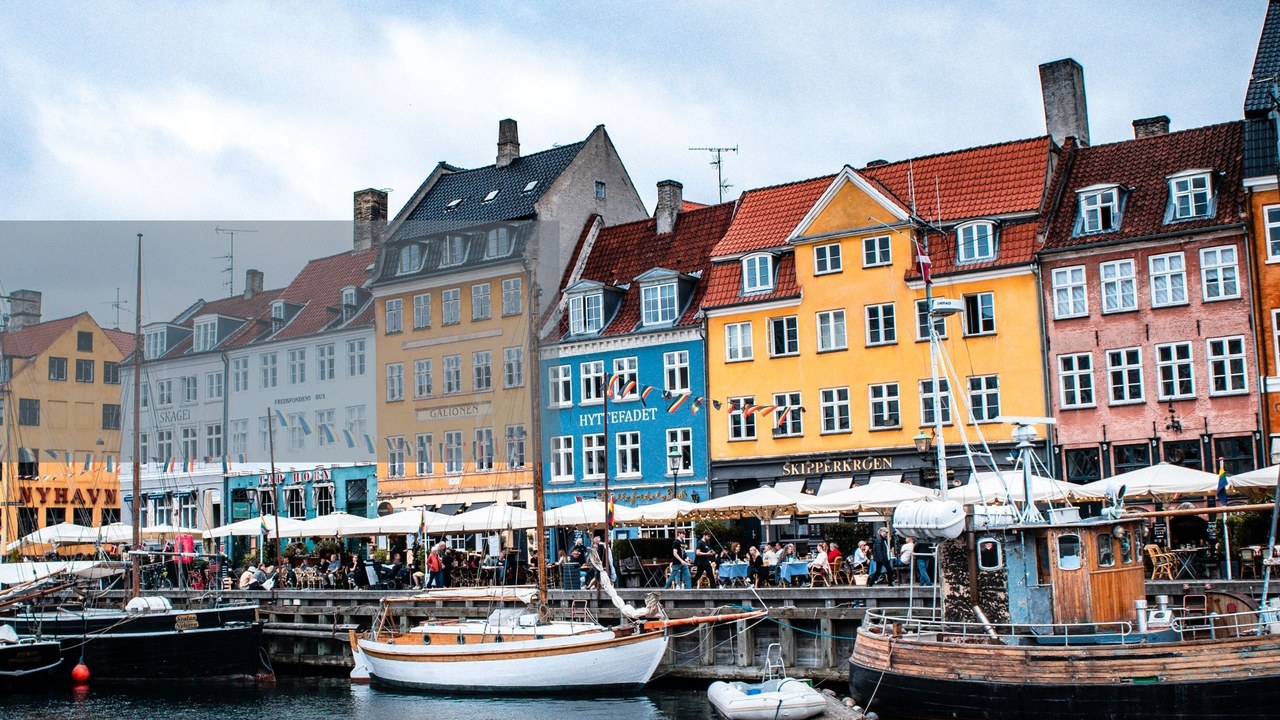
• Copenhagen: Nyhavn's canal-front houses, a strong design and food culture, and one of the most cyclable, compact centres of any European capital.
• Stockholm: an approach through an archipelago of thousands of islands before docking near the Old Town, Gamla Stan, on its own small island.
• Helsinki: a maritime capital built around islands and sea fortresses, with a distinctive design and sauna culture.
• Tallinn: widely considered the best-preserved medieval old town on the Baltic, uphill and a short walk from the berth.
• Gdańsk, via Gdynia: a rebuilt Hanseatic waterfront and the circuit's most historically weighted stop, particularly for twentieth-century history.
• Riga (on longer itineraries): Latvia's Art Nouveau architecture and its own well-preserved old town.
How long should a Baltic cruise be, and what kinds are there?
Seven nights covers the core loop comfortably, while 10 to 14 nights is the shape to choose if you want the full ring of capitals or more time in port rather than more capitals.
• 7 nights: the standard, covering the core four capitals plus the Polish coast, round-trip from Copenhagen or Stockholm.
• 10 to 14 nights: adds Riga and Klaipėda for Vilnius, additional smaller ports, or converts some existing calls into overnight stays.
• 14 nights and longer: either a genuinely extended Baltic circuit or a combined voyage pairing the Baltic with the Norwegian fjords or the British Isles as part of a broader Northern Europe itinerary.
• Repositioning voyages: spring and autumn sailings connecting the Baltic season to the Mediterranean or the Atlantic, often with more sea days and lower fares.
Itinerary shapes worth knowing:
• Round-trip capital loops: the standard shape, simplest to fly to and from.
• Overnight-in-port itineraries: an increasingly common format where the ship stays late or overnight in one or more capitals, changing a single day into an evening as well and easing the pressure to see everything in daylight hours.
• One-way combined voyages: pairing the Baltic with the fjords or the British Isles on a single longer sailing, typically between Copenhagen or Stockholm and Southampton or a similar hub.
Deployment shifts year to year, and Baltic routings specifically have changed in recent seasons following the Saint Petersburg absence — ask us what is actually scheduled on your dates rather than assuming a route repeats.
What will you actually see and do?
A Baltic port day is a city day, nearly every time, and the main planning task is choosing which two or three things to prioritise in a capital that could easily absorb a week.
The walk-off capitals: Tallinn, Copenhagen, Stockholm, and Helsinki all put the historic centre within a short walk of the berth. These are the days to go independent, start early to get ahead of tour groups in the old towns, and cover ground on foot or by the excellent local public transport most of these cities offer.
The history-heavy day: Gdańsk carries the circuit's densest twentieth-century history, from the shipyards where the Solidarity movement began to the wartime reconstruction of the old town. It rewards reading a little beforehand more than most Baltic stops.
The design and culture days: Copenhagen and Helsinki both lean heavily into design, architecture, and craft, and both reward a museum or a considered wander through a design district over a checklist of sights.
The archipelago approach: Stockholm's sail-in through thousands of islands is worth being on deck for regardless of whether you plan to go ashore immediately — it is one of the more distinctive arrivals in European cruising.
What to taste, port by port: open sandwiches (smørrebrød) and pastry in Copenhagen; herring, crispbread, and a proper coffee-and-cake fika pause in Stockholm; rye bread and a beer hall culture in Tallinn; pierogi and pickled vegetables on the Polish coast; and black bread and cold soups in Helsinki. Alcohol is notably expensive across Scandinavia in particular, worth factoring into any drinks budget.
Which cruise lines and ships sail the Baltic?
Most major international lines run a Baltic season each summer, generally on the larger ships in a line's fleet given the region's strong big-ship port infrastructure, alongside a meaningful luxury and small-ship presence for travellers wanting a quieter version of the same circuit.
Large-ship mainstream: Royal Caribbean International, Norwegian Cruise Line, MSC Cruises, Princess Cruises all run summer Baltic itineraries, typically as part of a broader Northern Europe season on ships repositioned for the summer.
Premium: Celebrity Cruises sits between mainstream and luxury, with stronger enrichment programming that suits a region built on history and design as much as scenery.
Luxury and small-ship: Oceania Cruises, Regent Seven Seas Cruises and Silversea Cruises all run Baltic itineraries on smaller vessels, generally with more inclusive fares and a stronger lean toward overnight-in-port stays than the largest ships offer.
One honest note: deployment changes every year as lines rotate ships between the Baltic, the fjords, and winter markets, and the short season means a given ship's Baltic presence may only run a handful of weeks. If a specific ship matters to you, confirm it sails your dates before building the trip around it.
How does Baltic cruise pricing work?
Baltic fares are driven mainly by season and by how many overnight-in-port stays an itinerary includes, more than by cabin category.
Season is the largest lever: June and July carry a clear premium for the longest daylight and the most reliable conditions. May and September cost meaningfully less, with the trade-offs already described.
Itinerary shape is the second lever: a standard round-trip loop with daytime-only calls is generally the lower-cost entry point. Itineraries built around overnight stays in one or more capitals, or those extending to Riga and Klaipėda, typically cost more, reflecting both the added days and the added port fees of a more ambitious routing.
Cabin choice comes third, in the usual order of inside, oceanview, balcony, and suite. The Baltic is a city-intensive region where relatively little scenery happens while the ship is underway compared with a fjord or Arctic itinerary, so the balcony argument here rests more on personal preference than on missing anything essential.
Check what the fare includes before comparing: Scandinavia in particular is expensive ashore, so excursions and drinks bought in port land harder here than in cheaper regions. A luxury fare that includes excursions and drinks can compare far better against a mainstream fare than the headline price suggests. Comparing true all-in cost is the single most useful thing an advisor does.
Talk to our cruise specialist to match your dates and budget to the right ship and itinerary.
Who is a Baltic cruise best for?
• First-time cruisers and city-first travellers: a seven-night core-loop round-trip from Copenhagen or Stockholm, ideally with at least one overnight stay in port.
• History travellers: the Baltic carries an unusually dense and layered history for its size, and Gdańsk in particular rewards a genuine interest in the twentieth century.
• Design and culture travellers: Copenhagen and Helsinki, both strong on architecture, craft, and museum culture.
• Travellers wanting no flight from continental Europe: itineraries departing from Amsterdam or Hamburg, which avoid a separate flight to a Scandinavian hub.
• Return visitors wanting more depth: a 10- to 14-night itinerary adding Riga and Klaipėda, or a line leaning heavily into overnight stays.
• Solo travellers: any of the above, but ask about the single supplement before booking — it varies sharply by line and is highest on the small luxury ships.
When is the best time to cruise the Baltic?
June and July deliver the longest, palest evenings and the most reliable warmth, which is why most of the fleet concentrates there, but they are also the busiest and most expensive weeks. May and September cost less and see thinner ports, with more changeable weather and shorter days. The season overall runs roughly May to September.
What ports do Baltic cruises typically visit?
Most week-long itineraries cover a core of Copenhagen, Stockholm, Helsinki, and Tallinn, usually with the Polish coast added via the port of Gdynia for Gdańsk. Longer 10- to 14-night itineraries often add Latvia's capital Riga and Lithuania's port of Klaipėda for Vilnius.
How long is a typical Baltic cruise?
Seven nights is the standard for the core loop. Ten to fourteen nights is the more common length for itineraries adding Riga and Klaipėda, more overnight stays, or a combination with the Norwegian fjords or the British Isles.
Do Baltic cruises still visit Saint Petersburg?
No. Saint Petersburg was historically the circuit's centrepiece, often with an extended two-day call, but calls there are not currently part of Baltic itineraries. Lines have restructured routings around additional time in the remaining capitals rather than replacing it with a like-for-like substitute.
Which port should I fly into for a Baltic cruise?
Copenhagen and Stockholm are the two main embarkation hubs and both are well connected, with either worth a pre-cruise night given how much each city offers on its own. Some longer itineraries instead start from Amsterdam, Hamburg, or Southampton, using the Baltic capitals as the core of a longer Northern Europe voyage.
Is the Baltic cruise season short?
Yes, relative to warmer regions. The fleet is concentrated between roughly May and September, with most ships departing the region by the end of September as the season closes and daylight shortens quickly through the autumn.
Do I need a visa for a Baltic cruise?
It depends on your nationality and the specific countries your itinerary calls at, since the Baltic circuit crosses several European Union Schengen countries. Entry requirements change, so confirm current rules for your passport and your exact itinerary well before you sail.
Are Baltic ports walkable from the ship?
Most of the core capitals are. Tallinn, Copenhagen, Stockholm, and Helsinki all developed their historic centres around the harbour, so the old town typically sits within a short walk of the berth. The main exception on the standard circuit is Gdańsk, reached via the separate port of Gdynia.
How much time do you get in each Baltic port?
Most calls run a full day, commonly eight to ten hours ashore, and an increasing number of itineraries include a late stay or a genuine overnight in one or more capitals. Given how compact most of the core old towns are, a full day is generally enough to see the highlights without feeling rushed.
Which cruise lines sail the Baltic?
Most major lines run a summer Baltic season, including Royal Caribbean International, Norwegian Cruise Line, MSC Cruises, Princess Cruises and Celebrity Cruises, alongside luxury and small-ship operators such as Oceania Cruises, Regent Seven Seas Cruises and Silversea Cruises.
Is the Baltic good for first-time cruisers?
Yes, generally regarded as one of the more approachable regions for a first cruise: short overnight hops between ports, calm and largely enclosed water, walkable capitals, and typically a single flight in and out via Copenhagen or Stockholm.
What should I pack for a Baltic cruise?
Comfortable walking shoes with grip for cobbled old towns, a genuinely waterproof outer layer, and warm layers for cooler evenings even at the height of summer. A modest option covering shoulders and knees is worth having for any churches or religious sites on the itinerary.
Find your Baltic sailing — tell us your dates and who is travelling, and we will match the ship, route, and season to you.
Fares and ship deployment change constantly, and this region's short season means capacity is limited in peak weeks. We check both against live sailing inventory rather than publishing figures that go out of date — ask us for current pricing and what is actually scheduled on your dates.
Written by the NAVICRU Cruise Desk · Published September 2026 · Destination information verified through September 2026.
This guide was prepared with AI assistance from verified cruise-port data. Details such as excursion availability, pricing, entry requirements, itinerary routings, and seasonal closures can change — confirm anything time-sensitive before you sail, or ask our cruise specialist.